Showing posts with label book review. Show all posts

Friday, December 2, 2011

Reviving Tolstoy in a Chelsea Bookstore

Tenth avenue is its usual blur of color, wind and noise, covered in two-legged, four-legged and many-wheeled commuters. Some of the two-legged ones plant themselves on four-legged chairs inside 192 Books, a serene, studio-sized room wallpapered with books and floor-to-ceiling windows looking out onto the cacophony. They are here for a talk organized by The Coffin Factory, the literary magazine whose mission is to bury the “pessimism that literature and reading are dead.”  Featuring Dr. Rosamund Bartlett, translator of and expert in Russian literature (particularly Tolstoy and Chekhov) and NYU Creative Writing Professor Lara Vapnyar, the evening is to discuss and celebrate the legend of Leo Tolstoy: his impact on literature back when he was its contemporary and what resonates today, for his descendants (geographically, literally, emotionally), our contemporaries.

Dr. Bartlett began with Tolstoy’s legacy: while he is best known today for four very long novels (including War and Peace and Anna Karenina), he also compiled a huge religious and spiritual body of writings in the 1870s and 1880s that was as popular as his fiction at the time.  He translated the Gospels and “reinvented Christianity in his own image,” creating for the Russian masses a new narrative of the unrelenting search for the truth and meaning of life--and inspiring Mahatma Gandhi and other pacifists with his famous book The Kingdom of God is Within You.  Not surprisingly, he was excommunicated from the church in 1901.

Bartlett described him as a “walking one man reformation” in a country that had never had a reformation or a renaissance--back in the 1880s, she pointed out as an example, that “it was a bit cranky to be a vegetarian.”  Throughout her research, she was stunned by what a prolific “dissident in imperial Russia” he was.  (As struck by our speaker was Lenin who penned seven essays about him including “Leo Tolstoy as the Mirror of the Russian Revolution,” in 1908, which promptly became required reading in schools all over the country.)  Over time, however, and especially posthumously, he has been a “rather difficult figure to deal with.”  2010 was Tolstoy’s centenary and Chekov’s 150 year anniversary, and while the former was barely noted, the latter involved President Medvedev making a personal visit to Chekov’s hometown of Taganrog.

Prof. Vapnyar resurrected him for us with less technical, more personal respect, nostalgic for a childhood growing up with his books.  To her and her generation, Tolstoy was always “more for us than just a writer,” and War and Peace, her favorite novel, was simply “beyond literature.”  Fifteen years old and reading the book, she had one of the most significant revelations of her life: “I am going to die.”  She admired how truthfully Tolstoy treated the “grandeur of the events” of life and death.  Bartlett added that Tolstoy’s “unstinting honesty,” “enormously long sentences” and complete avoidance of rhetorical devices made for a completely unique literary language.  Ever the rebel, Tolstoy did not merely play with language, he reconfigured it.

Therefore it did not seem surprising to hear Vapnyar confess to measuring “what happened in my life by Tolstoy.”  Living a quiet childhood, “I had to fall in love with literary characters,” and found herself comparing real life lovers to the character of Prince Andre--not necessarily a pleasant undertaking.  Bartlett concurred: Tolstoy was a “genius for universalizing” and “going into the tiny gradations of human experience.”  She admired how nakedly he worried about “the thought of his not being alive” and the strength that this fear gave to his writing.  

“It’s not that Tolstoy resolves something...that’s not what literature is supposed to do,” Vapnyar explained, alluding to the questions Tolstoy grappled with in literature and in spirituality.  “You come to the fact that peace is impossible” because “he doesn’t lie to you.”  Having extensively taught Tolstoy, Bartlett admitted that “you get a bit fed up with his moralizing,” but she happily rediscovered her love for him when writing his biography.


A “very mercurial young man,” Tolstoy seemed to steal even language from other nations, speaking “absolutely flawless French,” enjoying Dickens and Trollope (he named his dogs after Dickensian characters) and outdoing language professors in Greek and Hebrew after just a few months studying the languages.  Bartlett was satisfied sticking to Russian.  “For me, translating is one of the noblest activities there is,” she said, and praised Russian for being such an intimate language.  To read Chekhov and Tolstoy in their native tongue is “just a different world...you feel closer to the writer.”  Here, Bartlett shared another tidbit from her research: Chekhov, poor and of the lower class, wrote his short, simply sentences in tiny, “modest” handwriting.  Tolstoy, however, was an aristocrat who chose to identify with the peasants, and employed “huge, very aristocratic” handwriting.

Bartlett taught us that the Russian language has two words for truth: pravda refers to daily, common truths while ista refers to the deep truth.  Tolstoy unanimously wrote in quest of the latter, whether he was interpreting religious teachings or divining some of the longest works of literature known today, and Bartlett connected this single-mindedness to “something perhaps innately Russian about this idea of rebellion.”  Vapnyar was more weary of such writing.  “I don’t think people are looking for deeper truth in literature anymore.  Period,” she said.

But all is not lost.  While Vapnyar insisted that as a writer she is “absolutely not” influenced by Tolstoy, she gracefully concluded that: “there are some writers you can’t learn from because they are too perfect.”  Knowing this, and hearing Bartlett say that “no one who writes about Tolstoy can cover everything,” it might be enough for new writers to know that Tolstoy is better as inspiration than as someone to aspire to.

Monday, September 13, 2010

Iliya Troyanov turns History into His Story

Sir Richard Francis Burton, who arrived in India in the 19th century as just another army officer was a man who specialized in collections and travels. A curious amalgam of personas, Burton was regularly suspected by the locals in every place he called home, absconded and traveled in disguise (as a doctor and a dervish, in one case), but he was as regularly respected and even occasionally sought after by the locals. He was fluent in more Indian languages than an average Indian. He was a man who “could adopt the manners and values of the people in front of him without any effort, sometimes without even consciously deciding to do so.”

Author Iliya Troyanov narrates into being Burton’s extensive voyages through India, the Middle East and Africa in his grandly titled book, THE COLLECTOR OF WORLDS. The book shines because of the energy its characters exude in reliving a past of vanished cultures, religious magic, philosophic knowledge and, simply, epiphany. Burton has been molded by desert winds, human throngs and merciless plagues, and they leave their timeless marks on him; this book is as much about Burton as it is about the countries to which he pledged unique allegiances.

Troyanov is acutely aware of his bold attempt to revive history, fattening a skeleton of fact that is both exalted and controversial with the flesh, bloodstream and pulse of fiction. His paragraph of preface includes the customary message that characters are made up, insisting that “all individual lives are mysterious, particularly those of people one has never met,” a tip of his hat to undaunted explorers of yore. If one can never know a person in totality, then isn’t fiction the best way to attempt intimacy? Yes, says Troyanov, with a nod to time travel, cueing one of my favorite moments in the book, between an old man and his grandson:

- I was Bwana Burton’s binoculars.

- What’s that?

- An instrument that brings what’s far away near.

- Like time?

Having recently read two factual travelogues, I notice the absence of maps and photos in Troyanov’s 444 page book. It is a subtle reminder that, as real and subversive as Burton was in his time, Troyanov prefers to honor him with imagination and flourish than with library archives. He buries Burton in the first sentence – “He died early in the morning before you could tell a black thread from a white” – and presents his adventures through the reminiscent voices and words of people who knew him best – none British, we observe. We meet Burton’s man servant Naukaram in India, who narrates his tale to a lahiya – a letter writer since Naukaram is illiterate – and produces a rich, emotional first person narrative spiced with the lahiya’s cheeky interpretations. “That is genuine scruples,” the lahiya asserts after re-writing a section of Naukaram’s story, “distorting a story until it becomes true,” and I appreciate the parallels between the lahiya and Troyanov, in outlook and outcome. We hear four of Burton’s Muslim friends debate the sincerity of Sheikh Abdullah’s pilgrimage (as he was known in these chapters) to Mecca – was he a true Muslim? Was he spying for the British? – and before any resolution to these questions, we are again treated to first person accounts of Burton’s movements and thoughts. In the third and final section of the book, we are taken to the garden of the chatty Sidi Mubarak Bombay, a native of Zanzibar, who is part of Bwana Burton’s expedition to “find a meaning for the white patches on the world’s maps.” He recalls the past with the pace of the sun rolling across the East African sky, slowly, steadily, increasing in intensity as the sun accelerates its blushing descent. His friends and grandson – and, begrudgingly, his wife – listen wide-eyed. Burton’s first-person voice is heard in small doses, in letters to his brother where he remarks on several subjects: “Persian… seems to me the proudest of all languages…We’ve never had such a trapdoor to ecstasy”; “A racecourse and three brothels. What more does an Englishman need?”

The emotional tableaux in THE COLLECTOR OF WORLDS are as complex and varied as the physical scenes of mosques, deserts and slums that Burton experiences. He falls in love with a woman who, “when she sang, it was as if she was decking the day out with jewels.” He approaches God with uncanny grit, but even the Hajj does not convince him fully:

“The paradise that surrounds him fills him with delight, but even with the best will in the world he cannot accept the notion of a life after death, any more than he can the balance sheets God is supposed to fill out before peopling His kingdom. God is everything and nothing, but He is not a book-keeper.”

Several times in the deserts of East Africa, “death [holds] him hostage” but he refuses to succumb, driven to discover what men – white men – have not yet seen, smelled or tasted in all of history. He sustains his momentum with the notion that “if all other fear is alien, the fear of failure has to be similarly suppressed.”

Burton’s personality metamorphoses so many times that Troyanov is wise to speak of him through others, kindling Burton’s breaths with the voices of his associates. Religion encourages keeping company with holy companions to help you further your spiritual quest; Burton does this with people devoted to and believers in their way of life, deepening his identity as one of them without a complete transformation. Some of his disguises disturb Naukaram, as the latter recalls, while others amuse him and he finds himself laughing “as if I was scraping laughter out of a burnt pot.” One friend observes, “I think this man is outside faith of all kinds. Not just ours. That allows him to go here his will takes him, without attacks of conscience,” and I agree that Burton’s conviction seems beget by curiosity, that he runs on a restlessness spanning all religions. He is a devoted shishya (student) to his righteous Hindu guru; he basks in the current of believers flowing through Mecca; he slumbers in “the sand, the best of all beds, in the desert air,” en route to Lake Victoria enjoying what his British companion perceives as harshly administered neglect by and on a civilization of obscure desert tribes.

The landscapes that Burton lives in and travels through are putty in a good writer’s hands, and Troyanov constructs them marvelously. He captures Bombay’s distracted frenzy in two sentences, when Burton first lands in India: “A child without skin was thrust towards him. Burton was horrified for a moment, then forgot about it.” Troyanov joins authors like Rohinton Mistry and Salman Rushdie in painting frenzied pictures of a bustling city with a mix of short sentences, winding diatribes and descriptive lists.

Burton’s mysterious motives for traveling to and struggling in places of extreme poverty, heat and religiosity do not interfere with Troyanov’s hope for closure at the end of his multi-layered story. The querulous lahiya and his dissatisfied wife end up collaborating on Naukaram’s near-epic. Sidi Mubarak Bombay’s wife cannot contain her surprise and appreciation for her oratorically gifted husband and replaces her mockery of his tale with gestures of love and intimacy. The four Muslims ultimately and unanimously believe that Burton “will have experienced God’s infinite grace” and Sidi Mubarak Bombay, once annoyed at his white masters’ ignorant authority on a near-fatal journey through a desert, today peacefully admits, “I don’t understand the wazungu” (white men).

While the Arab proverb states, “Conceal Thy Tenets, Thy Treasure, and thy Traveling,” that Burton includes in his PERSONAL NARRATIVE OF A PILGRIMAGE TO AL-MADINAH AND MECCAH in 1855, Troyanov gives us the locals’ tenets and Burton’s treasures through the travels of a motley collective. Through all this, Burton’s true identity seems still concealed; as Bombay observes, “I can’t describe [Burton] fully because he never showed himself to me fully.”

Attempting to unravel the enigma that is Burton is in itself a pleasure. And by seeking that pleasure, we, the Reader, in some small way become the collector of worlds.

Book: THE COLLECTOR OF WORLDS (A Novel of Sir Richard Francis Burton) by Iliya Troyanov, translated by William Hobson. Published by Ecco, 2009.

Monday, August 30, 2010

The Past, Current and Future of the Indus River

I never liked studying History in school, being averse to forced memorization instead of enjoyment of a story from the past. This meant that after finishing school and renouncing exams altogether, I didn’t naturally wander over to the History section at a bookstore. After reading Eric Newby’s travelogue last week, however, I realized that I could be hoodwinked into reading about history and geography if it was wrapped in a fictional or adventurous narrative.

Devastating and dramatic press about the unprecedented flooding in Pakistan brought to the surface a book that meets and exceeds this criterion: Alice Albinia’s book EMPIRES OF THE INDUS is an ambitious journey along the Indus River, traveling physically along it as well as historically through the civilizations, settlements, discoveries and fatalities that the River has nourished, and suffered from. Albinia tells us in the Preface that even studying Indian history “eclectically, omnivorously and hastily,” it is wildly obvious that “everywhere I turned, the Indus was present.”

The next logical step for a student of history and literature after forming such a hypothesis is to test it, of course. And so Albinia spends four undaunted years traveling on and along a river, taking dilapidated boats, befriending taxi drivers, traveling on foot, climbing mountains, descending into valleys, and squeezing into jeeps as required. She crosses borders legally and illegally, colorful in bright shalwar kameezes and stamped in anonymous black and white when burqa-clad. Her fluent Urdu wins over policemen and passersby alike and she is uncannily able to find the information she needs to round out the particular chapter she is working on.

Time and again during this journey up a river, I find that the Indus is still – as it has been for centuries – a place where people, ideas and religions meet and mingle.

The constant current of coincidence and ease Albinia encounters helps belie the predominantly weary, frustrating and at times dangerous journey this must have been, but her book is a tidy balance of history, travelogue and memoir that keeps me turning the pages.

Albinia kindles the two-dimensional history in books, libraries and articles to a three-dimensional kind. The history in the life and voice of a river, whispered in the dark around a fire, swimming in Pakistani sewers, lurking in Sufi tombs – “a torrent of colour and life” – and contained in an age-old Afghani “sex potion” (with hallucinatory side effects!). Broken boat propellers and illegal border crossings are minor obstacles to the river Albinia insists on following from the Arabian Sea back to its source in Tibet; she marvels with informed confidence at the lessons she is learning: she comments that a young Pakistani father cooking his children dinner is “a thing as rare in Pakistan as a free and fair election,” and she shares her “deeper understanding of the world of good, well-behaved, God-fearing Muslim girls” while boldly dismissing the descendants of Sufi saints as “universally unreliable” in their spirituality and sincerity.

The book’s chapters are sorted into brimming buckets of time, starting in the 19th century with the British’s confounded reactions to the river, loving and hating it as their mood to invade shifted. Next are the Sheedis of the 18th century and a discussion of early Islam and its endearment towards the generations of African slaves imported into Asia. In the next chapter about the 18th century Sufi River Saints, Alice’s name becomes ‘Ali-se’ and takes on Islamic etymology, meaning ‘from Ali,’ who is “the Sufi father of them all.” Chapter four addresses the rise of Sikhs and Sikhism in the 15th century and their five-pronged sense of identity that mirrors the Indus’ branches. Following that—moving backwards in time, that is—is the 11th century that heralds the Mughals in India, regal emperors “whose grandsire was an Uzbek.” Beyond that the book moves into the BCE, covering Buddhist dynasties; Alexander the Great’s 400-km conquest which Albinia mimics on foot; Rigvedic life and the Aryans; Indus Valley civilizations-turned-archaeological sites; and northern Kashmir and Ladakh, home to the Empire of Eastern Women and female oracles, as carvings reveal. Here, Albinia pauses: “were I an Indian feminist, this stone would be my icon,” and I like her even more.

Moving through Pakistan’s provinces, Afghani terrain, northern India, Kashmir and Tibet, Albinia collects a swath of reactions to her journey and to the life-giving Indus River. Proud British invaders boast that the ‘haughty Lords of SINDE have indeed been humbled…we have at last secured our influence on the Indus,’ and today a pious Muslim woman throws her Qur’an into the river to pray for her son’s health to improve. Albinia understands and explains how Shah Inayat, a Sufi saint, embodies “Sindh’s distinct brand of nationalism – politically socialist and religiously syncretic,” just as the Indus boat-people’s proximity to the river is correlated to how orthodox Muslim they are, which I understand as an older version of urbanization and the concentric clusters of educated people that inhabit cities.

In his famous book SIDDHARTHA, Herman Hesse writes:

He who would understand this water and its secrets, so it seemed to him, would also understand many other things, many secrets, all secrets.

Albinia’s quest to understand the secrets of the Indus and the “many other things” it afforded, carried and drowned drives her towards Tibet. She has placated army officers, dressed in disguise, won the trust of shy women and drunk men and conversed through a chain of languages, resorting to reflective silence when language is lacking. I frequently forget that she is a British woman interviewing illiterates, digging up historical texts and making 4000 km detours, thanks to her smooth writing style and the hospitable peoples she interacts with who pay her 'differences' no heed. She has melded these tributaries of history into a rippling narrative worthy of the empires she writes about, and handed me my first exciting History lesson, too.

BOOK: EMPIRES OF THE INDUS by Alice Albinia, published by W. W. Norton & Company, Inc., 2008

Monday, August 23, 2010

'Can you travel Nuristan, June?'

My roommate is in Tanzania[1] until next January and we have been making plans to climb Mt. Kilimanjaro when I visit her in a few months. We both love the outdoors but neither of us has particularly deep climbing experience, and I’m looking forward to 6 days of ascent and acclimatization amidst the anarchy of roommates reuniting after quite some time. When a friend recommended I read Eric Newby’s book about traversing the Hindu Kush mountain range in Nuristan (in northeast Afghanistan) back in the 1950s, I thought it fitting to write about it here, to psych myself, my roommate and all of you into jumping into (or scaling) something without sufficient preparation. Almost dying is clearly more fun than a cushy—pardon the pun—jaunt in a new place, no?

In characteristically sardonic British form, Newby has titled his book A SHORT WALK IN THE HINDU KUSH[2], which takes his partner Hugh Carless and him a month to complete, and even then, they don’t actually get to the top of the 20,000 foot tall mountain Mir Samir—“resembling a crouching lion; its head the summit, a long plume of smoke the mane”— after two attempts. But don’t be dotty, that isn’t the point. It’s the “almost mocking beauty” of the Central Asian landscapes they scrabble over, where, hilariously, the air is “full of the promise of disaster” and the chickens they eat are so old Newby calls them pterodactyls. His writing predominantly induces laughter, in spite of the danger and dysentery his team faces—and did I mention that he used to work in the Fashion Industry in London?

The duo takes turns being intrepid and itinerant, targeting an intimidating mountain range with an embarrassing four days of training on a little hill in Wales. In an interview in 2000[3], an 80-year-old Newby expertly jokes that he had managed to “capitalize on being an idiot and not doing things right,” and this resonates loudly off the peaks of the Hindu Kush. An Italian shoemaker politely observes that Newby’s feet are “not the feet of a man, but of a monkey.” Carless reminds me of Walter from The Big Lebowski (John Goodman’s character). He’s fearless and confident, and sounds big and gruff, but is prone to moments of stupidity. His affirmative telegram response to Newby when the trip is first conceived is addressed to ‘Eric Rubey, Shammersmith’ and Newby acknowledges that its arrival to his office in Hammersmith is “a mystery.” As part of the British Foreign Service, Carless has been dispatched to various corners of the world and conveniently speaks fluent Persian, serving as Newby’s interpreter for as long as his patience will last—insert ridiculous sentences here from Newby’s Kafir grammar and language book, such as ‘I have nine fingers; you have ten,’ or, ‘How long have you had a goitre?’ in addition to the grunts, spits and glares the Englishmen are dealt by their team and Nuristani villagers.

Newby’s flair for crisp, pithy conversation makes me want to re-read Douglas Adams’ HITCHHIKER’S GUIDE TO THE GALAXY books for their abundance of wit and understatement. Newby and Carless are hitchhikers in their own right, at the mercy of roaring rivers, raining boulders, reticent Afghanis, conniving villagers and nervous horses, yet blindly forging their own paths across Turkey, Iran and Afghanistan. Carless has to threaten his anxious Afghan entourage with a made-up, ominous-sounding General Ubaildullah Khan to keep at this seemingly suicidal voyage; after all, they are at altitudes “not conducive to mildness.” Their humor rarely fails them, however:

‘Abdul Ghiyas says that we should post sentries for the night,’ said Hugh when it grew dark.

‘Do you want to be a sentry?’

‘No. I’d rather be murdered in bed.’

‘So would I.’

‘Abdul Ghiyas! No sentries!’

Newby evokes the curiosity and awe of the 14th century’s Ibn Battuta[4] who traveled an unprecedented 75,000 miles around Africa, Asia (Central, South and East) and Eurasia over 30 years, pilgrimaging to Mecca several times during that period. Newby overlaps slightly with this Muslim pioneer in the Hindu Kush, although they access it via different passes and in different eras. Writing in the 1950s, Newby is frank and attentive to the peoples and cultures he is passing through and depending on. When he first meets Nuristani villagers, he describes them “as strange and dated as the existentialists of St Germain des Pres; while those whose beards were still in embryo were as contemporary as the clients of a Café Espresso and would have been accepted as such without question almost anywhere in the Western World.” He describes the sweeping panoramas as elaborately as J.R.R. Tolkien does the fantastical vistas of his Middle-earth, although not ithout a dose of English snobbery:

As the afternoon advanced the woods were filled with an autumnal light. There were masses of hollyhocks from which rose the humming of countless bees. There were grapes too, as yet unripe, growing on trellises sheltered by the walls of the few houses. For some reason the appalling yellow fly had suddenly vanished.

Newby is humbled by Mir Samir, affectionate toward Carless by the end—dressing each other’s wounds and cooking for each other on stubborn, unfriendly fires daily tends towards companionship, he recognizes—and grateful for the opportunity to be a rare ice-ax wielding, pea soup-eating, fair-skinned face in the unforgiving plains and peaks of Afghanistan.

Here on the Arayu, one of the lonely places of the earth with all the winds of Asia droning over it, where the mountains seemed like the bones of the world breaking through, I had the sensation of emerging from a country that would continue to exist more or less unchanged whatever disasters overtook the rest of mankind.

I anticipate similar epiphanies after climbing Mt. Kilimanjaro, but don’t hold your breath, that would be dotty.

Book: A SHORT WALK IN THE HINDU KUSH by Eric Newby, published by Secker & Warburg Ltd, 1958 and by Lonely Planet Publications in 1998 and 2008

[1] Visit my roommate at her fantastic blog here: http://banyantreetraveler.blogspot.com/

[2]
Further reading: Check out William O. Douglas’s New York Times 1959 review “Popping off to Nuristan,” here: http://select.nytimes.com/mem/archive/pdf?res=F10910F63E5913748DDDA00994DC405B8989F1D3

[3] Full interview here: http://authorslounge.meettheauthor.com/37/eric_newby/

[4] Read more about Ibn Battuta’s travels here: http://www.ummah.net/history/scholars/ibn_battuta/

Monday, August 16, 2010

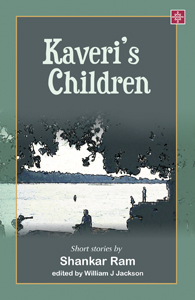
A Riverbed of Stories

The Tamil language fascinates me by its soft, mellifluous quality. Words roll together into one unbroken sentence, akin to the continuous current of a river. To come across literature by an early 20th century Tamil writer, then, is to stumble upon a brook of writing, a fluidity of words that flow through a reader and leave his fingers wrinkled, wanting more!

KAVERI’S CHILDREN, a collection of short stories by Shankar Ram (pseudonym for T. L. Natesan), meanders along the banks of the South Indian river Kavery and brings to life the farmers, crops, buffaloes and boatsmen who comprise its rural landscape. These stories have been compiled from other works by Ram, written in the 1920s and 1930s, selected and edited by Prof. William Jackson from Purdue University. His choices weave together the ebb and flow of village life, which Ram writes about in English while successfully evoking that characteristic perpetuity of the Tamil language. As Jackson notes in the Foreword, “With the aura of the colonial era, with its innovations and pretences, waxed and waned, and the fashions of modernity and post-modernity also come and go, the Kaveri river, like the Ganges, flows on and on.”

Thiruvalluvar, a Tamil poet from 200 B.C., writes in Thirukural*, his epic treatise on ethics:

They gain the world, who grasp and tell

Of taste, sight, hearing, touch and smell (verse 27)

Indeed, Ram has a firm footing on the banks of the Kaveri and tells of a slew of characters, families, livelihoods, confrontations, confessions and revelations. They taste friendship in hospitable meals and anti-venom treatments, see a family crisis when hunting tigers, hear devotion in a child’s flute, feel the wrath of the Gods upon the river and smell desperation in the barren fields their buffaloes have to graze in. Ram is startlingly descriptive: when a three-day storm ends abruptly, “Nature also woke to life as suddenly—as if she herself had overslept,” and when a crab clamps down on a man’s toe, the latter fears a poisonous snake, and it is “some time before either could realize their mutual mistake.” His English is quaint and smile-inducing, one character exclaims, “ ‘Hark! What is that clamour?’ ” while two others erupt into a “deadly display of fisticuffs” during a fight.

Not only do his stories contain twists and morals, like an Aesop’s Fable or a Tenali Raman tale, but Ram’s stories are prescient of 21st century life, observing the immortal flaws and traits of human nature and invoke Thirukural again:

In spotless mind virtue is found

And not in show and swelling sound (verse 34)

Ram writes of conversations and gossip that falls “into the limbo of forgotten things,” as talk so often does, and is weary of a character who makes “more money than perhaps was good for the soul,” a struggle exacerbated in today’s modern, ultra-urban world. He is eloquently perceptive, defining luck as an “unaccountable coincidence of covetable incidents,” and recognizing that “solitude trained different men differently.” But Ram’s stories are never heavy—they are refreshing, a gush of ideas and events that move steadily from conflict to resolution or, at least, realization. One story ends in a lie, another in a sacrifice and a third in forgiveness. Friendship sprouts like a crop to be carefully tended to, and Ram shrewdly points out two characters who are such dear friends that “such an ideal intimacy could not have existed anywhere among men, and that is why, perhaps, they were born as buffaloes.” Before Panchatantra tales where animals navigate justice, kindness and friendship, there were Ram’s buffaloes!

Happiness and kindness are given time to resonate in his stories, especially poignant after a crisis or tragedy. After all:

Life bereft of love is gloom
Can sapless tree in desert bloom? (verse 78)

Just as the river Kaveri is timeless, alive, and continues to nourish all who encounter it, so do Shankar Ram’s words and images for all of Kaveri’s children—Karupanna, Lakshmi, Chidambaram, Pichai, the Rajah, Narayanan and you, the reader. A must-read, if you can get your hands on the book!

*Translated by Kaviyogi Maharishi Shuddhananda Bharatiar, “Project Madurai,”

Book: KAVERI’S CHILDREN by Shankar Ram (T. L. Natesan), Published by Indian Writing, 2008

Monday, August 9, 2010

'Bollywood in a Book'

I would argue that a growing number of Indian authors based in America write the same Indian novel: families move between countries, immigration sparks generational confusion, offspring lose their traditional foundations, and so on. But not every author feels the need to explore the Indian’s loss of self while pursuing the American dream. Ask Vinita, the bold and passionate protagonist of Shobhan Bantwal’s THE UNEXPECTED SON what she thinks of such literature, and she might respond, as she does to the notion of arranged marriage:

“Different day. Different man. Different attire. Same damn agenda.”

Bantwal’s agenda, quite simply, is “Bollywood in a Book.” She spins a tale of pasts, presents and futures that she deftly narrates as a horrified mother, a hurt husband, a carefree college student, a rising politician—to name a few. While Vinita is “teetering on the cusp of adolescence, tumbling into womanhood,” her family, friends and hometown are navigating obstacles of their own. By the end of the book, the reader wonders which son Bantwal is referring to, since there are several, and each have their moments of unexpected clarity and calamity. Is it a character from the prologue? Is it someone in the last chapter?

Most of the story is set in fictional Palgaum, a conservative town squeezed on the border of two states, making it an inflammable hybrid of Kannada and Marathi communities, as so many border towns in India are. Unlike Bombay, “a cross between Hollywood and New York city where…no one begrudged the other their lifestyle,” Palgaum is a hotbed for ethnic clashes between the two groups. Residents coexist along a spectrum of understanding that Bantwal alludes to: when Vinita first meets the notorious jock Som Kori, not from her community, she observes, “standing alone in the shadows with a man of his reputation was hazardous.” As the plot unfolds in 1970s India, the reader witnesses how disastrous the encounter is for family relationships, reputations and communal politics. Thousands of miles and decades after these two characters meet, in a quiet town in New Jersey dressed in dogwoods and azaleas, an anonymous letter for Vinita recreates in an instant the chaos she had left behind in Palgaum.

Bantwal’s clipped sentences and bite-sized paragraphs grow and meander as the characters become more familiar and the plot more intricate. The latter tends towards the fantastic and drawn-out nature of an Indian movie, with Bantwal covering all familial relationships when such elaboration is perhaps unnecessary. The former helps to ground the reader with a consistent depth of thought and action, from raw maternal instinct to the gentle love of arranged marriage. Having developed such diverse characters, Bantal could let their voices inform the reader about who is speaking in each chapter, a la William Faulkner’s SOUND AND THE FURY, but she is always explicit.

Pledging allegiance to Bollywood customs, Bantwal prolongs scenes between angry and shocked characters, applying frustratingly traditional mindsets as men make decisions and bark orders while the women accept their fate. A couple waits for their eldest child, a son, to return home to take charge of a prickly family situation. Bantwal showcases the characters’ close-mindedness even as the story moves into the 21st century and the reader wonders why thought has not evolved more. Have political, social and cultural conflicts been exaggerated for the sake of a Western audience? Similarly, she depicts heroes and villains as polar opposites, their interactions abrasive and emotional. However, if this is “Bollywood in a Book,” the end of the book and those long-awaited moments of closure are lacking.

Bantwal has taken Jhumpa Lahiri’s favorite story line of inter-cultural, inter-family displacement and made it more original. She does not shy away from plot and character embellishments, and just when another twist to the plot seems unmanageable, Bantwal shines a light at the end of the tunnel. Read THE UNEXPECTED SON to see how families come together even as communities fall apart.

Vinita develops as a teenager, woman, mother. Her “Mummy” is most affectionate when maternal instinct kicks in and her sister-in-law’s cheerfulness is a welcome voice of levity when Vinita’s life is sinking into helplessness. Girish believes in love at second sight and Vishal’s perennially raised voice hides a layer of compassion underneath.

Book: THE UNEXPECTED SON, by Shobhan Bantwal, Published by Kensington, 2010

Monday, August 2, 2010

The Funda Behind Indian Detectives, British Authors and Megacities

What’s the “funda” behind India’s Most Private Investigator, beauty parlors and spirituality camps?

Ask British author Tarquin Hall and he’ll give you 300 pages of a mystery novel set in Delhi, THE CASE OF THE MAN WHO DIED LAUGHING, complete with a glossary of Indian terms at the end. His characters speak English, often amusingly Indianized, with a smattering of Hindi words and phrases, and this warrants a reference tool which Hall provides through context and an index. The case of the man who died laughing is elaborate, and Hall cleverly uses each fact and facet of the case to explain another idiosyncrasy of Delhi and its urban middle class society to the reader. This is his second in the detective series, and both have received positive reviews from readers worldwide.

The book opens on the city’s clogged roads. Investigator Vish Puri is a few body-jerking traffic jams away from concluding a case and while his car stagnates en route to a critical handoff, the reader is given a whiff of Delhi’s chaos and introduced to Puri and some of his operatives. There is “Handbrake,” the driver, and “Tubelight,” named so because he is “usually ‘slow to flicker on’ in the morning,” (p.3). Puri himself is nicknamed ‘Chubby’ by family members—the Punjabis can’t resist being endearing—and these well-meaning jabs at the characters give the book an airy feel, encouraging the reader to breeze through the book without being slowed down by the inertia of heavy analysis. While this is encouraging for a reader seeking a quick read, and reminiscent of Alexander McCall Smith’s fun and successful NO.1 LADIES’ DETECTIVE AGENCY series set in Botswana, it sometimes detracts from the suspense Hall creates in his chapters. When a private party is interrupted by armed, masked men, for example, the woman being robbed are more indignant than terrified at the guns being pointed at their faces. Hall deals with the crime briefly, rushing to the investigative chapters that follow—the masala, if I may. Puri’s wife and mother are at the scene of the crime and the Detective doesn’t seem too concerned that their safety has been compromised. Is it because, as India’s Most Private “jasoos” (detective), he—and his family—are invincible? Is it Hall being funny? The tone of the book is unclear in those moments.

But Hall is systematic in setting up his scenes before action in the form of bullets, gossip, levitating magicians and hidden passageways swoops in. Returning to chapter one, a nervous man waits at a “distinctly Indian” amusement park (whatever that means!) with a large duffel bag of money he has been instructed to give to a complete stranger. Dialogue deludes the reader into thinking the money is ransom for the man’s children, when the reality is much less dire. At another moment, one hundred pages in, Puri speed-dials someone on his cell phone:

A woman’s drowsy voice answered.

‘I woke you?’ asked Puri.

‘I was just getting up.’

‘I’ll see you tonight?’ (pp.101 – 102)

By now the reader has met Puri’s cheerful wife, sharp mother and several of his trusty operatives and colleagues. Everyone seems earnest and likeable, except for the requisite relative with questionable intellect and a penchant for alcohol, and the suspects in the case. It seems unlikely Puri is having an affair, with his busy schedule and eye for roadside food. Hall’s pattern of scene-before-context reminds the reader to keep going, and the drowsy woman is introduced properly as an integral, hardly scandalous part of the cast. If this is Hall being humorous, it feels a little trite, but he quickly shifts focus to Puri’s detective activities—his forte—and the plot hums along.

Each case Hall creates and solves in this novel is deliberately included to demystify the city of New Delhi, a fascinating juxtaposition of modern and traditional, and home to millions of personalities. One case addresses the permanent headache of school admissions, another sheds light on the rising chic appeal of spirituality camps, and a third puts the reader at a “kitty party,” a regular get-together for women, and follows the gossip into their favorite beauty parlor. The men attend early morning laughing clubs where they “[ejaculate] hee-haws like drunken men,” (p.17), drink whiskey, play carom and spout crass or “non-vegetarian” jokes. Hall is confident in his familiarity with the city to provide social, cultural and religious commentary, a sense of context to enhance the read without giving anything away. New Delhi is one of the fastest growing cities in the world whose mass transit system, completed earlier this year, has impressed India’s biggest skeptics, finishing on schedule and within budget. There is a loud buzz in the city as it prepares to host the Commonwealth Games in October and Hall captures this raw, bustling energy with a humorous cast and a creative, redemptive plotline.

The case grows more complex with every chapter, but its resolution feels a bit anticlimactic: critical characters aren’t seen at the end, last heard from chapters earlier, and the book ends on a completely unrelated note. However, the case is solved and everyone is happier and better off. For a quick and light foray into Delhi, as a local or tourist, dip into Hall’s book and find out how fatal laughter can be.

My thanks to Rohan John for the book!

Monday, July 26, 2010

Bhopal Gas Tragedy – Some Fictional Thoughts

Twenty-six years ago the city of Bhopal erupted in toxic fumes; sixty days ago the Indian Supreme Court delivered a disappointing verdict to compensate still-suffering victims. While the latter digest what little they’ve been awarded and newspapers publish concluding facts and editorials on the subject, it’s worth taking the time to read Indra Sinha’s ANIMAL’S PEOPLE and remember that sixteen and sixty years from now, Bhopal will still sting from the gas tragedy of 1984. As Sinha’s main character explains halfway through the book, “time doesn’t exist…Hope dies in places like this, because hope lives in the future and there’s no future here, how can you think about tomorrow when all your strength is used up trying to get through today?”

Twenty-six years ago the city of Bhopal erupted in toxic fumes; sixty days ago the Indian Supreme Court delivered a disappointing verdict to compensate still-suffering victims. While the latter digest what little they’ve been awarded and newspapers publish concluding facts and editorials on the subject, it’s worth taking the time to read Indra Sinha’s ANIMAL’S PEOPLE and remember that sixteen and sixty years from now, Bhopal will still sting from the gas tragedy of 1984. As Sinha’s main character explains halfway through the book, “time doesn’t exist…Hope dies in places like this, because hope lives in the future and there’s no future here, how can you think about tomorrow when all your strength is used up trying to get through today?”


A well-oiled machine in a factory hums with efficiency; India screeches and groans and whimpers, bearing the weight of one billion people. Some carry trays of vegetables on their backs calling out to customers, some stand with bent knees straight gazes fingers curled around a cricket bat as millions of eyes watch on, and some tap their feet with lazy urgency as they summon their drivers from airconditioned doorways. People face forward, their attention arrested at every angle by movie posters, honking trucks, buzzing crowds, brimming skies. When they look down, it’s to avoid garbage, shoo away a stray dog, or spit. Rarely is it to listen to a young boy with stumps for legs who locomotes around the slums of Khaufpur on a board with wheels.


ANIMAL’S PEOPLE is a book whose main character, Animal, makes the reader do just that, forcing him to confront exhaust pumps and feel the sun’s rays refracting off the burning roads. He is a young boy braving poverty and puberty with no legs, a birth defect, and he multitasks with attitude, dancing around pedestrians’ knees, developing a sore neck talking to people twice and thrice his height, and cursing passersby who annoy him. Animal teachers the reader to move a little slower, albeit more doggedly, towards food, friends and fights, proving over three hundred and fifty pages that he is the ideal narrator for a book about his people. Sinha operates close to the ground, creating his characters’ stories with an eye on their footsteps. Animal challenges the reader to acclimatize to a new topography; fitting for a city that now sits wearily on a fatal foundation of poison, for a community of people dehumanized enough that a main character prefers being called ‘Animal’ to anything else.


Animal is an orphan in a city orphaned by justice. Khaufpur is the fictional town that houses a factory responsible for the plague killing and affecting generations of its residents. The heart of the gas tragedy beats with each page of filth Animal shows the reader: “Platforms, ladders and railings are corroding. Its belly is a tangle of pipes like rotting guts…Look throughout this place a silent war is being waged…yet that night was a freezing night of stars.”


Animal’s friends and family share hearts and memories and money and homes between them since everyone lost something vital “that night.” Their voices rise with opinions and opposition, they orate about justice, protests, redemption. Animal faithfully shares these conversations with the reader in his unique language: he berates the “kampani,” wonders about the “jarnalis” eager for Animal’s story, learns “inglis” and confides in a doctress from “Amrika.” The closest person he has to a mother is a French nun, Ma Franci, and they share a methyl isocyanate-laced language of pidgin French and Hindi that only they understand. He loves a girl, Nisha, and suffers for it, expressing his unrequited love for her with pidgin attempts with words and scars on his knees from climbing trees. No real Indian story is complete without a love triangle or quadrilateral so Animal spends many pages on Nisha’s love, Zafar, and his love for judicial vendettas, while Nisha’s father and an American doctor navigate their own personal tragedies together.


Each street of Animal’s slum offers another story of devastation out of the days months years generations following “that night.” The poor writhe in smoke and dust, but the reader experiences fresh food and ripe relationships in Nisha’s part of town where musicians and doctors and philosophy exist. Animal learns about melody from Nisha’s father, hope from Elli doctors, research from Nisha, patience from Zafar, attachment from Ma Franci. His lust for happy endings—personally and publicly—propels the narrative through Khaufpur’s struggles and victories against the wretched factory’s retching curses: he desires girls, enlightenment, independence, pride, humanity, respect. Sinha bestows each of these on Animal in ways expected and unexpected; a parallel to the predictable and unforeseeable damage Khaufpur endures and overcomes, thus becoming a city worth writing about.


The Bhopal gas tragedy will always be worth reading about. Sinha’s book, a 2007 Man Booker Prize finalist, is a brutal and riveting place to start.

Book: ANIMAL'S PEOPLE, Indra Sinha, Simon and Schuster, 2007.