Sunday, September 26, 2010

Going Bananas

[Arusha]

Katana’s mother—call me Mama, she insists—introduces Hamsa and me to Bahati, their cow. His name means lucky and his bellows are as prolonged and persistent as a conversation of greetings in Swahili—habari nzuri mambo poa karibu asante—that goes back and forth. I quickly lose track of who is the host and who is the guest, who's starting the conversation and who's responding, and not because I don't speak Swahili.

Mama wants to make a special dish for lunch, Katana’s favorite. Armed with a scythe, she asks a passerby to help her cut down some banana bunches from her farm and he cheerfully obliges. He hacks at the trunk, it folds, bending over, and he is now tall enough to cut as many banana bunches from the treetop as Mama wants. Then he hacks at the rest of the trunk and once the tree falls over, pierces the trunk with the scythe to drag it out of the way. Mama cuts and peels the fruit in preparation for a large meal of ndezi zaku pika – banana with coconut milk and beef – and its vegetarian sibling, ndezi zika kanga, fried banana.

Katana shows us around his home town. We visit his sister, play with her darling son Eli, visit some ATMs, milk them dry and buy sandals off the street. We visit the Arusha Snake Park with Gloria, pick up mountain climbing snacks and camping supplies at a grocery store and return home for a late dinner. Ndezi is waiting for us in various forms and we indulge hungrily, while Mama refills our plates even before they’re empty.

It rains steadily through the night and the constant drip outside our window keeps me up a while. I watch the moon peeking out through the grey drapery of sky. She parts them coyly to reveal more cloud and more grey—while continuing to hide a mountain.

Saturday, September 25, 2010

The Hills Before the Foothills

[Dar Es Salaam --> Arusha]

Eyes open to sunshine, ears awaken to the perennial construction outside Hamsa’s window where a team of laborers demolish a building brick by brick. We breakfast, strap our backpacks on—click, click—and wait downstairs for Hamsa’s friends Katana and Gloria, students at the nearby Muhimbili Medical School who are traveling north with us to Arusha, the foothills of Mt. Kilimanjaro.

The taxi ride is a jostle of bodies and giggles; if our overstuffed hiking packs aren’t enough, 2 containers of Katana’s fish swish in the trunk. The bus station is expectedly but not overwhelmingly crowded. Exactly as the digital clock behind the bus driver blinks 7:30 we set off, inching our way out of the throngs of the bus depot and onto the main road. What follows is 10 hours of pure, relaxing entertainment. We chat, snooze, and are treated to a cocktail of local soap operas, vintage MTV—O Town, Tina Turner, Celine Dion, Michael Jackson, Boyz II Men, Enrique Iglesias— and refreshingly popular Bongo Flava. The Angrezi—English—soap opera subtitles, Gloria informs us, are mostly inaccurate. Regardless, we deduce that Richmond, one of the characters, is quite notorious.

Our fellow passengers are couples, older women—traveling solo, to their credit—and young boys in crisp white and navy uniforms, their tickets folded neatly in their shirt pockets. They watch the TV open mouthed and bounce along to the music, and when they get off the bus at Moshi 8 hours later they skip and stride like determined students not yet corrupted by adolescence.

The weather cools—feeling like early Fall in New York—and Gloria is prepared with a sweater; she is cold in 60 degree weather, how quaint!

The landscape tells a story of geography, history, culture: I stare into farming horizons, maize farms grow brittle post-harvest and baby coconut trees proudly brandish their bouquet of daggers bursting out of the ground. Villages remind me of the Three Little Pigs: huts are made out of brick, sticks, hay; roofs are thatched and made of cement. Larger villages boast cars and their signs boast a surprising array of services: car mechanics to stationery stores to schools to pubs. “Tanzania Department of Infrastructure” boards pop up frequently, near construction sites and railway crossings, as do signs for Primary and Secondary schools—several English medium. The more urban centers boast tall buildings and Montessori schools. Everywhere people are lounging, talking; the women are bursts of color made even brighter by the bold fabrics they are washing. A mother carefully places a bucket on her young child’s head, he clutches it with excitement in his eyes. How long will that excitement last?

We wind our way north and the ground rises too, upwards into grassy hills. When distant, they are 2 dimensional jagged trapezoids, each layer a lighter shade of grey. Up close they are invitingly green; the trees standing on the silhouetted surface look like humans and animals in different postures—standing, walking, crawling, crouching; an evolution of/by Nature? Each tableau interrupts the next: half-built huts stand next to schools with colorful murals which swallow up parts of hills. The brown remnants of farms muddy the lush green adjacent to it, readying our eyes for the red earth surrounding the villages lined parallel to the highway. Hills approach from the left and encroach on the right. The vastness is intensified by railroad tracks that seem narrower than usual and rivers that, now in dry season, are diminished in level and current.

At bus stops big and small our windows are crowded by baskets of wooden tools, oranges and jewelry, held up by hopeful arms eager to make a sale. The old woman across the aisle buys a pack of oranges through her window. It is unclear if she pays the seller in time because the bus is moving again and she still clutches money in her hand, her window still open. I wonder how often a transaction like this goes unpaid. She does not seem too concerned, and is soon asleep again.

Residential patches of landscape announce themselves with a tantalizing poster of a woman drinking a bottle of Coke—her head tilted back, her eyes closed, the anticipation of pleasure thick. At first this poster is attached to signs for pubs, restaurants and the odd hostel; then I see it liberally announcing teashops, markets and fax/photocopying stores. I think about it long enough to accept and interpret the sign as representing beverages, efficiency, ease, entertainment—applicable to a stationery store and a pub. Brilliant in its versatility!

Our lunch stop, about 5 hours into our journey, lasts 20 minutes. Tables laden with fresh fruit arrest our eyes, the smell of cooking meat and fried snacks tugs at our noses. Back on the road, we pick up speed, darting between the 2-lane 2-way highway the way Indian truck drivers do, except without any honking. Impressive.

At a major fork, after unloading half the bus at Moshi, we turn right and Katana promises us Mt. Kilimanjaro past the clouds. For now, it is hidden.

Katana’s father greets in Arusha where our bus journey ends, and we walk a few minutes through banana plantation to his beautiful home. Katana’s parents repeatedly greet and welcome us, karibu, and we repeatedly greet and thank them with respect, shikamo, and they repeatedly acknowledge our formal greeting with their own, marahaba, and welcome us again, karibu, and we thank them again, asante, and this goes on until Hamsa and I have been shown to the guest room, taken showers and are seated in the dining room with plates full of steaming, freshly made, fully vegetarian food warming our laps. There is nothing like coming home after traveling for 10 hours!

Friday, September 24, 2010

Mambo? Poa!

[Dar Es Salaam]

Hamsa and I leave the house bright and early to meet some friends for breakfast. The employees at Glory Café serve food with a smile and dollops of sunshine; glorious, indeed. It’s bang opposite Helen Keller International, where Hamsa is volunteering for 6 months, and a 5 minute walk from Hamsa’s apartment (which becomes important later, when I break my shoe on the way back from her office). But back to Glory Café. There are a few tables outside where flies and crows aggressively buzz around, eye and attack our plates of food, which includes boiled eggs, chappati (a cross between an Indian roti and a crepe), bananas and other fried delicacies.

Hamsa introduces me to her colleagues: Rafiki angu Aditi—this is my friend Aditi—from New York. She recommends that I visit Slipway, a bazaar of shops and restaurants by the beach, and return to her office in time for lunch. One of her colleagues calls his friend Anton, a taxi driver, to ferry me there and back, and we enjoy catchy Bongo Flava music – a mixture of reggae and pop – during the drive. Anton and I chat a little and he teaches me a few more Swahili words. Mambo is ‘how’s it going’ and Poa is an affirmative response: going well, cool. We drive along the beach past large, pretty bungalows and bougainvilla trees swishing in the sea breeze. This is the posh part of town, away from the traffic and city center, where diplomats, ambassadors and wealthy expats (forgive the redundancy) live.

Slipway is an indoor and outdoor market place selling all kinds of fantastic African crafts. The unfinished sign on the long roof above the row of shops reads “The ” – I wonder what it was meant to say. I start in the outdoor section where Anton drops me off. It is barely 9am and the stalls are just being opened. Owners are splashing water on the floor and cleaning their spaces; I’m impressed at how many of them are women. The stalls are numbered, most have names – “Anna Ndeja”; “African Antiques.” It is reminiscent of the Christmas markets that sprout in Union Square and Bryant Park in New York, or the maze of stalls in Bombay’s Fashion Street. Being so early in the morning, the crowd has not yet arrived – nor all the stall owners – and I am free to wander in and out of the few that are. Slipway is on the beach, and between the markets and the inviting blue of Msasari Bay is a boat yard with boats in varying states of repair. The inviting hotels here include a playground, sheltered seating with a view of the water, and a pub.

The sole customer, I am treated to singular attention by the vendors. I assure them all their wares are mzuri—beautiful—and promise to come back after I have been to all the stalls. Large canvases of Tinga-Tinga paintings hang on and are propped up against the stall walls. Each stall is maybe 6x4 and there is just enough space for me to stand inside while the vendor points out key chains, necklaces, and sugar pots. There are belts made out of coconut shells, bookends with elephant heads, animal print scarves and dresses, jewelry made out of paper, zebra napkin holders, masks, toy safari trucks, sandals, rings, placemats, pencils, hippo paperweights, plates, bowls and cushions, to name a few.

A cheerful looking man calls out to me, mambo! Poa, I respond, and he is delighted. His name is Samson and this is his store, he has made all these things. His friend has done these paintings and that is his sister’s store but she is not here today. He shows me the toy safari jeep, shows me how the roof opens. He points inside: wazungu!—Swahili for white foreigner. He imitates them standing up in the safari jeep as they drive through a national park, calling out, elephant, giraffe! It is hilarious to watch him make fun of safari goers; that’ll be me in about two weeks. Our conversation continues:

Samson: What is your name?

I repeat it several times, he finds my name difficult.

Samson: Married?

Me: No.

Samson: Friend? (I assume he means boyfriend.)

Me: Yes. (That’ll stave off questions, right?)

Samson: Where from?

Me: India. Are you married?

Samson: No. I want a wazungu friend. Swahili women are…meh.

I am cracking up by now. But I must be supportive.

Me: There are so many wazungu here, coming to buy things. Do you talk to them?

Samson: No. I want a good one.

Pondering his final statement, I let another vendor accost me, she talks non-stop, assures me good prices for being her first customer – a superstition I learn from Hamsa, that if the first customer buys something, the store will have good luck for the rest of the day. Another vendor insists I remember her store, #22. When she sees me 2 hours later, she waves – “I am waiting for you,” she reminds me. A third shows me her necklaces, including the Big Five necklace –the 5 animals that make a safari an official success: lion, elephant, rhino, giraffe, leopard. Mambo, rafiki, they say; welcome, friend. Habari dada – how are you sister. I feel completely welcome and safe, left to browse and smile and leave empty handed without any hassle.

The indoor souk has scores of jewelry, clothing, footwear and other trinkets on display. Inside ‘A Novel Idea,’ the bookstore, I am most taken by the children’s books: The Greedy Zebra and The Handsome Hog are brightly illustrated and Tom and Jenny go to Tanzania is a funny comic strip by David Chiko about an American couple visiting Tanzania for the first time.

Anton returns to pick me up 4 hours later. We drive back to HKI along the shore; Anton points out Coco Beach and I watch the blue of the ocean for as long as I can. Back at HKI, Hamsa and I order lunch from Glory Café and 3 large plates, like South Indian thalis, are delivered to the office almost immediately: rice, bananas, kidney beans, spinach, pickle: delicious, and all for $1.

Post-work, we embark on a frustrating series of attempts to withdraw money and buy our plane tickets to Rwanda, where we’re headed 3 weeks later with some of Hamsa’s friends. We exceed ATM withdrawal limits and lose money exchanging Tanzanian shillings for American dollars—fifteen hundred shillings to the dollar. My traveler’s cheques are worthless and one of 10,000 shilling notes Hamsa withdrew from the ATM is a fake; we watch the woman with tired eyes at the Bureau de Change rip it up. We conclude our ill attempts with local beer at the Hotel Movenpick Bar, which the bartender serves with a mixture, the Indian take on a bowl of peanuts. We gobble down 2 bowlsfull, watching WNBA on one TV and cricket on another while wealthy wazungu order pretty cocktails and the Japanese men next to us light their cigarettes; I forget that I’m in “Africa.” Back home with bursting pockets and an empty stomach, we finish packing for Mt. Kilimanjaro—we leave for the foothills tomorrow—and watch John Wayne in Hatari! about a group of people in East/Southern Africa catching wild animals for zoos around the world. Hamsa perks up at every Swahili world and I picture myself on a safari. Goodbye for now, Dar Es Salaam.

Thursday, September 23, 2010

Karibu!

[Dar Es Salaam]

The Immigrations officer at Dar Es Salaam’s Julius Nyerere International Airport is struck by my first and last name – “no other names?” he asks. I compensate with a series of Swahili words – mostly greetings or one-word commands, mostly nonsensical when concatenated – and he nods me through, amused at this girl with no middle name.

The drive from the airport is replete with stories and giggling – 3 months of gossip and random ponderings with my long-lost roommate to catch up on, after all. “Karibu,” she squeals, which means ‘welcome’ and is a popular way to greet a newcomer or guest. A few men nonchalantly straddle traffic medians selling mobile phone accessories and cashewnuts, and I wait for the next layer of poverty – the beggars – to knock on our windows, but no one follows. Large billboards tell us to choose the CCM political party – loved in the villages; disappointing to the urbanites, Hamsa tells me – and to get Visa credit cards. Shoprite is the fancy supermarket run by South Africans; the majority of Dar shops at smaller stores and road side marketplaces. Hamsa points out the large Swami Narayanan temple – “karibu” – built for the large and self-segregated community of Indians. They own most stores in Dar and local Africans work for them, complicating relations and making it rare for the 2 communities to mingle socially. One of Hamsa’s friends is a medical student, keen to specialize and begin his own practice so he doesn’t end up working for someone (especially an Indian).

We pass the Muhimbili Hospital and medical school on our left – one of 4 medical schools in Tanzania, and very highly reputed; the student body is entirely scholarship-funded. Population Services International (PSI) has painted elaborate murals on the walls around the university and the adjacent school, warning students, pedestrians, children, loiterers – anyone – of the dangers of AIDS. Use protection, focus on your studies, don’t talk to strangers, and so on.

Hamsa’s building is tall, parrot-green with a perimeter of parked cars. The gate is manned by friendly security guards who, like the airport officials, strangers and taxi drivers I’ve met so far, welcome me with a smile and a “Karibu!” “Asante!” I thank them. Hamsa lives in a beautiful, spacious 3 bedroom-2 bathroom apartment that would make any New Yorker cry. The floors are tiled and there is a veranda in the back to hang-dry clothes. New to me are the mosquito nets hanging above the 3 beds; they are helpful reminders for the malaria medication I need to take once a week.

We go for a walk. Hamsa tugs at my arm as we turn out of her building and I think she has forgotten something. “Pole pole,” she says, meaning slowly. “You aren’t in New York anymore.” She’s right; everyone here walks very slowly. She jokes, “people in Africa walk slowly because we have nowhere to go!”

There’s a fruit seller on the corner, a vegetable shop across the street, a restaurant down the block with the persuasive name, “Delicious Foods,” opposite “Yes Restaurant” on the other side of the road. Men and woman chat and laugh as they saunter home and children return from school in crisp uniforms. Oranges are in season and fruit sellers tempt our noses as they rapidly peel the fruit for on-the-go consumption. An ice cream seller trundles past on a bicycle playing music; he gives us a toothy grin. It feels like a quiet street in Madras, but with a fraction of the people.

The best part? Tanzanian men aren’t aggressive or lecherous. Everyone minds their own business and I walk around completely relaxed, barring general alertness that my bag or camera not be stolen. Compared to India, Egypt, and even New York City, I feel free. I slow down a little more.

We walk past a dala dala stop – a bus stop; what a fun way to say bus! – where several mini buses are lined up and filling with passengers. “Filling” is an understatement; these little vans are crammed to capacity with colorfully dressed men and women sitting standing leaning elbowing bending to maximize the space inside. No one hangs off the sides or rides on top, as they do in India, but the bus is impressively stuffed with scarf-swathed heads and lean limbs. Accidentally meeting eyes with a stranger does not invite lewd stares; I peer into the dala dalas with unabated curiosity.

We meet 2 of Hamsa’s friends for dinner at a street stall on a dark street with no street lights. The vendor has a grill for meat skewers and a table with several upturned bowls for the stew we’re about to eat, urojo. He points to 2 benches on the sidewalk where we settle ourselves. 10 minutes later, 4 bowls are produced, filled with stew. A yellow liquid is poured into each and 2 kinds of pickle – tomato and mango – are provided. Urojo is hot and tasty, an array of textures in every bite. Ingredients include potato, cassava chips, onion, herbs and spices. We eat in the darkness, debate vegetarianism and share travel stories. Karibu, the stars twinkle at me. Asante, I answer, my mouth full.

'I lick soccer'

[Dubai --> Dar Es Salaam]

The Dubai airport is an explosion of glittery, glossy duty free. Perfume is helpfully sprayed onto strips of card so I am unable to douse myself in flower and fruity smells as I had hoped to after a 12 hour plane ride. I walk through the store slowly, hoping to absorb the sweet scents anyway.

Seated at my gate some hours later, I fight sleep by finishing the book I’m about to gift Hamsa when I see her. The book – I Was Told There’d Be Cake (thanks, Carolyn!) – makes me smile, and so does the little kid next to me. He’s probably 6, full of energy, and tiring everyone at our gate with his nonstop chatter. His exasperated mother hands him a notebook and instructs him to write, hoping it will quiet him down. The journal has a furry monster face on the cover and I am envious; mine is spiral-bound with birds on it. “Hi I am Luca I lick soccer,” he begins ferociously and again I am envious; I seem to take forever to put words on paper (and then, on my blog). His thoughts spill out unpunctuated, his constant questions go unanswered. I’m glad he’s not my kid, but he’s awesome!

It’s a significantly shorter flight from Dubai to Dar Es Salaam. Breakfast follows sunrise and then we are descending, 265 miles in 30 minutes. Perspective swims back into focus the lower we fly – ships leaving a white wake no longer look like tiny snails creating determined paths of goop behind them. We’re almost in Tanzania!

I memorize the ten Swahili words in my guide book while my Pakistani neighbor reads from his Qu’ran; the two of us quietly repeat words to ourselves in an odd parallel. My neighbor must have been very focused because he asks me, as plane wheels touch the ground, if I’m from Tanzania. Holding my conspicuously yellow Lonely Planet guidebook in my hand, I shake my head, no, hapana ;)

Wednesday, September 22, 2010

Clouds, Sky and Waterfalls

[New York City --> Dubai]

I’m Africa bound! Hamsa, Tanzania, Rwanda, Mt. Kilimanjaro, safaris, Zanzibar – the vacation I’ve been saving up for all year – is almost within reach, 2 plane rides away. My first flight is from JFK to Dubai and it will take 12 hours. It’s the longest I’ve sat put in one place, the longest I’ve felt the earth’s landscape ebbing and flowing below me. Taking breaks from the constant stream of movies on my personal television screen, I fraternize with the clouds at eye-level. Daytime and nighttime announce themselves in silent blazes of color, forcing me to wonder: where do the hues of sunrises come from, where do those of the sunset go? It must be these upper skies that planes fly through. They rest here, before their shifts, keeping us company, transcending time zones and mocking confused watches. Here they wait: flat, unbroken bands of color; an even, unperturbed pulse of sky; the ingredients of a horizon; the steadiness of meditation.

Two Indian men are seated next to me, sporting Niagara Falls State Park Sandals. This cracks me up. What is it with Indians and Niagara Falls? I can’t explain our national compulsion to visit. Most stories I hear from Indian friends and family include claustrophobic drives to the Falls and Maid of the Mist ferry ride-induced sniffles. I have similarly fond – fondly similar? – memories, of course.

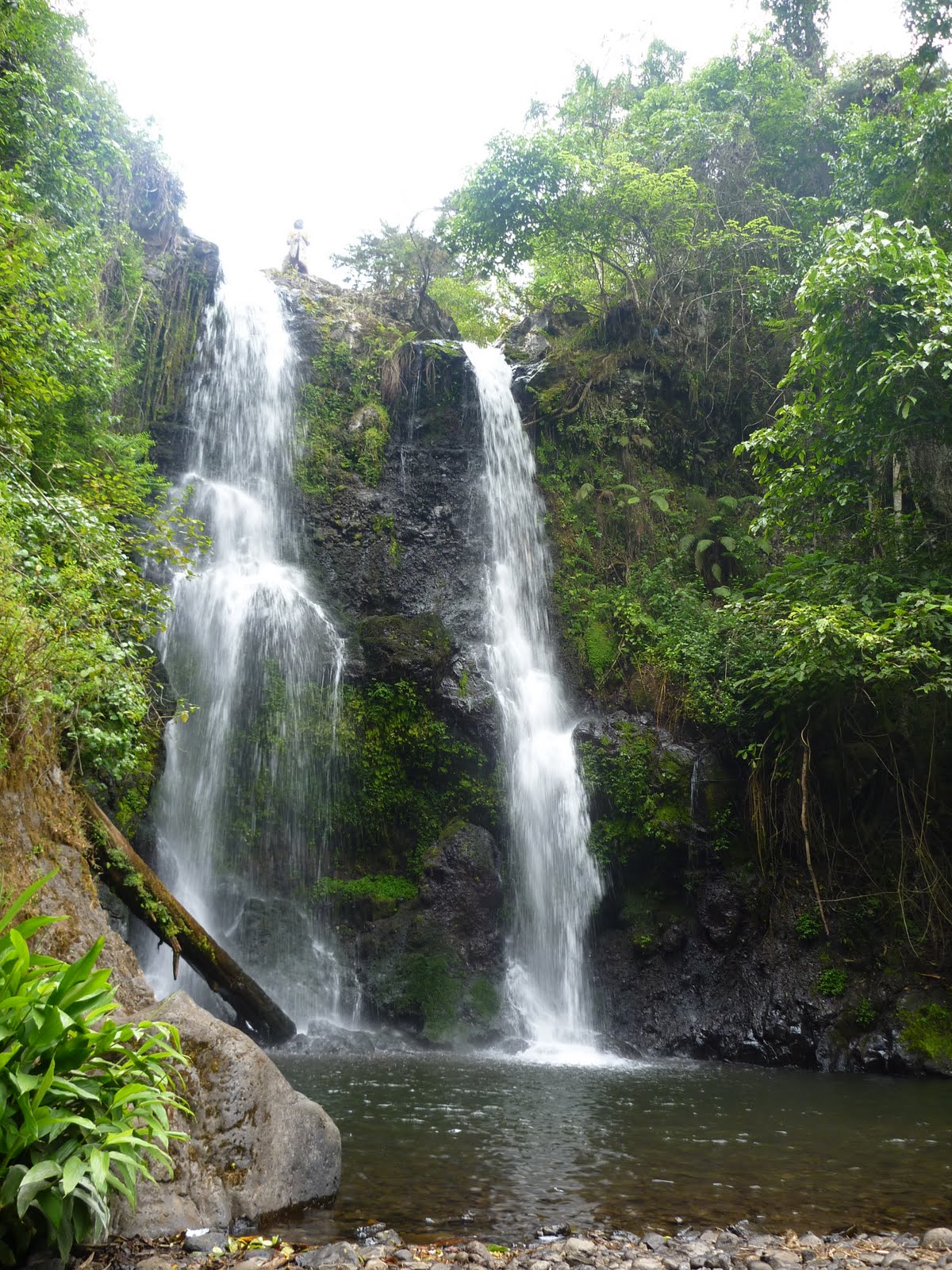
Antoine de Saint-Exupery, author of the well-known Le Petit Prince (The Little Prince), has a great passage in his Wind, Sand and Stars (thanks, Megan!) where African nomads (the Moors) encounter a waterfall for the first time. I reflected on it then, and you can now:

Memories that moved them too deeply rose to stop their speech. Some weeks earlier they had been taken up into the French Alps. Here in Africa they were still dreaming of what they saw. Their guide had led them to a tremendous waterfall, a sort of braided column roaring over the rocks. He had said to them:

“Taste this.”

It was sweet water. Water! How many days were they wont to march in the desert to reach the nearest well; and when they had arrived, how long they had to dig before there bubbled a muddy liquid mixed with camel's urine! Water! .... A thing worth its weight in gold! .... And this water, this miserly water of which not a drop had fallen at Port Etienne in ten years, roared in the Savoie with the power of a cataclysm as if, from some burst cistern, the reserves of the world were pouring forth.

“Come, let us leave,” their guide had said.

But they would not stir.

“Leave us here a little longer.”

They had stood in silence. Mute, solemn, they had stood gazing at the unfolding of a ceremonial mystery. That which came roaring out of the belly of the mountain was life itself, was the life-blood of man. The flow of a single second would have resuscitated whole caravans that, mad with thirst, had pressed on into the eternity of salt lakes and mirages. Here God was manifesting Himself: it would not do to turn one's back on Him. God had opened the locks and was displaying His puissance. The three Moors had stood motionless.

“That is all there is to see,” their guide had said. “Come.”

“We must wait.”

“Wait for what?”

“The end.”

They were awaiting the moment when God would grow weary of His madness. They knew Him to be quick to repent, knew He was miserly.

“But that water has been running for a thousand years!”

And this was why, at Port Etienne, they did not too strongly stress the matter of the waterfall. There were certain miracles about which it was better to be silent. Better, indeed, not to think too much about them, for in that case one would cease to understand anything at all.

--Wind, Sand and Stars; Chapter 7, Part III

[Picture taken at Marangu Falls, just outside the Marangu route entrance to the Kilimanjaro National Park.]

Monday, September 13, 2010

Iliya Troyanov turns History into His Story

Sir Richard Francis Burton, who arrived in India in the 19th century as just another army officer was a man who specialized in collections and travels. A curious amalgam of personas, Burton was regularly suspected by the locals in every place he called home, absconded and traveled in disguise (as a doctor and a dervish, in one case), but he was as regularly respected and even occasionally sought after by the locals. He was fluent in more Indian languages than an average Indian. He was a man who “could adopt the manners and values of the people in front of him without any effort, sometimes without even consciously deciding to do so.”

Author Iliya Troyanov narrates into being Burton’s extensive voyages through India, the Middle East and Africa in his grandly titled book, THE COLLECTOR OF WORLDS. The book shines because of the energy its characters exude in reliving a past of vanished cultures, religious magic, philosophic knowledge and, simply, epiphany. Burton has been molded by desert winds, human throngs and merciless plagues, and they leave their timeless marks on him; this book is as much about Burton as it is about the countries to which he pledged unique allegiances.

Troyanov is acutely aware of his bold attempt to revive history, fattening a skeleton of fact that is both exalted and controversial with the flesh, bloodstream and pulse of fiction. His paragraph of preface includes the customary message that characters are made up, insisting that “all individual lives are mysterious, particularly those of people one has never met,” a tip of his hat to undaunted explorers of yore. If one can never know a person in totality, then isn’t fiction the best way to attempt intimacy? Yes, says Troyanov, with a nod to time travel, cueing one of my favorite moments in the book, between an old man and his grandson:

- I was Bwana Burton’s binoculars.

- What’s that?

- An instrument that brings what’s far away near.

- Like time?

Having recently read two factual travelogues, I notice the absence of maps and photos in Troyanov’s 444 page book. It is a subtle reminder that, as real and subversive as Burton was in his time, Troyanov prefers to honor him with imagination and flourish than with library archives. He buries Burton in the first sentence – “He died early in the morning before you could tell a black thread from a white” – and presents his adventures through the reminiscent voices and words of people who knew him best – none British, we observe. We meet Burton’s man servant Naukaram in India, who narrates his tale to a lahiya – a letter writer since Naukaram is illiterate – and produces a rich, emotional first person narrative spiced with the lahiya’s cheeky interpretations. “That is genuine scruples,” the lahiya asserts after re-writing a section of Naukaram’s story, “distorting a story until it becomes true,” and I appreciate the parallels between the lahiya and Troyanov, in outlook and outcome. We hear four of Burton’s Muslim friends debate the sincerity of Sheikh Abdullah’s pilgrimage (as he was known in these chapters) to Mecca – was he a true Muslim? Was he spying for the British? – and before any resolution to these questions, we are again treated to first person accounts of Burton’s movements and thoughts. In the third and final section of the book, we are taken to the garden of the chatty Sidi Mubarak Bombay, a native of Zanzibar, who is part of Bwana Burton’s expedition to “find a meaning for the white patches on the world’s maps.” He recalls the past with the pace of the sun rolling across the East African sky, slowly, steadily, increasing in intensity as the sun accelerates its blushing descent. His friends and grandson – and, begrudgingly, his wife – listen wide-eyed. Burton’s first-person voice is heard in small doses, in letters to his brother where he remarks on several subjects: “Persian… seems to me the proudest of all languages…We’ve never had such a trapdoor to ecstasy”; “A racecourse and three brothels. What more does an Englishman need?”

The emotional tableaux in THE COLLECTOR OF WORLDS are as complex and varied as the physical scenes of mosques, deserts and slums that Burton experiences. He falls in love with a woman who, “when she sang, it was as if she was decking the day out with jewels.” He approaches God with uncanny grit, but even the Hajj does not convince him fully:

“The paradise that surrounds him fills him with delight, but even with the best will in the world he cannot accept the notion of a life after death, any more than he can the balance sheets God is supposed to fill out before peopling His kingdom. God is everything and nothing, but He is not a book-keeper.”

Several times in the deserts of East Africa, “death [holds] him hostage” but he refuses to succumb, driven to discover what men – white men – have not yet seen, smelled or tasted in all of history. He sustains his momentum with the notion that “if all other fear is alien, the fear of failure has to be similarly suppressed.”

Burton’s personality metamorphoses so many times that Troyanov is wise to speak of him through others, kindling Burton’s breaths with the voices of his associates. Religion encourages keeping company with holy companions to help you further your spiritual quest; Burton does this with people devoted to and believers in their way of life, deepening his identity as one of them without a complete transformation. Some of his disguises disturb Naukaram, as the latter recalls, while others amuse him and he finds himself laughing “as if I was scraping laughter out of a burnt pot.” One friend observes, “I think this man is outside faith of all kinds. Not just ours. That allows him to go here his will takes him, without attacks of conscience,” and I agree that Burton’s conviction seems beget by curiosity, that he runs on a restlessness spanning all religions. He is a devoted shishya (student) to his righteous Hindu guru; he basks in the current of believers flowing through Mecca; he slumbers in “the sand, the best of all beds, in the desert air,” en route to Lake Victoria enjoying what his British companion perceives as harshly administered neglect by and on a civilization of obscure desert tribes.

The landscapes that Burton lives in and travels through are putty in a good writer’s hands, and Troyanov constructs them marvelously. He captures Bombay’s distracted frenzy in two sentences, when Burton first lands in India: “A child without skin was thrust towards him. Burton was horrified for a moment, then forgot about it.” Troyanov joins authors like Rohinton Mistry and Salman Rushdie in painting frenzied pictures of a bustling city with a mix of short sentences, winding diatribes and descriptive lists.

Burton’s mysterious motives for traveling to and struggling in places of extreme poverty, heat and religiosity do not interfere with Troyanov’s hope for closure at the end of his multi-layered story. The querulous lahiya and his dissatisfied wife end up collaborating on Naukaram’s near-epic. Sidi Mubarak Bombay’s wife cannot contain her surprise and appreciation for her oratorically gifted husband and replaces her mockery of his tale with gestures of love and intimacy. The four Muslims ultimately and unanimously believe that Burton “will have experienced God’s infinite grace” and Sidi Mubarak Bombay, once annoyed at his white masters’ ignorant authority on a near-fatal journey through a desert, today peacefully admits, “I don’t understand the wazungu” (white men).

While the Arab proverb states, “Conceal Thy Tenets, Thy Treasure, and thy Traveling,” that Burton includes in his PERSONAL NARRATIVE OF A PILGRIMAGE TO AL-MADINAH AND MECCAH in 1855, Troyanov gives us the locals’ tenets and Burton’s treasures through the travels of a motley collective. Through all this, Burton’s true identity seems still concealed; as Bombay observes, “I can’t describe [Burton] fully because he never showed himself to me fully.”

Attempting to unravel the enigma that is Burton is in itself a pleasure. And by seeking that pleasure, we, the Reader, in some small way become the collector of worlds.

Book: THE COLLECTOR OF WORLDS (A Novel of Sir Richard Francis Burton) by Iliya Troyanov, translated by William Hobson. Published by Ecco, 2009.